Adopting a nameless skull: the anime pezzentelle of the Fontanelle Cemetery
In the Sanità neighborhood, there’s a quarry filled with nameless bones. For a century, Neapolitans picked a skull, cleaned it, gave it a pillow and a candle, and asked it for a grace in return. The cult, the ban, and the reopening.
The Rimmofatt! editors · October 31, 2026
A woman bends over a pile of bones, picks out a skull, and gently wipes it with a handkerchief. She sets it down on another, embroidered handkerchief, lights a candle next to it, and whispers to it like you would to a family member. She doesn’t know its name. She hopes that tonight, in a dream, it’ll tell her.
We composed the scene ourselves, but it’s made of what the sources say. It really happened, for decades, in a huge tuff quarry in the Sanità valley: the Fontanelle Cemetery.
A quarry full of bones
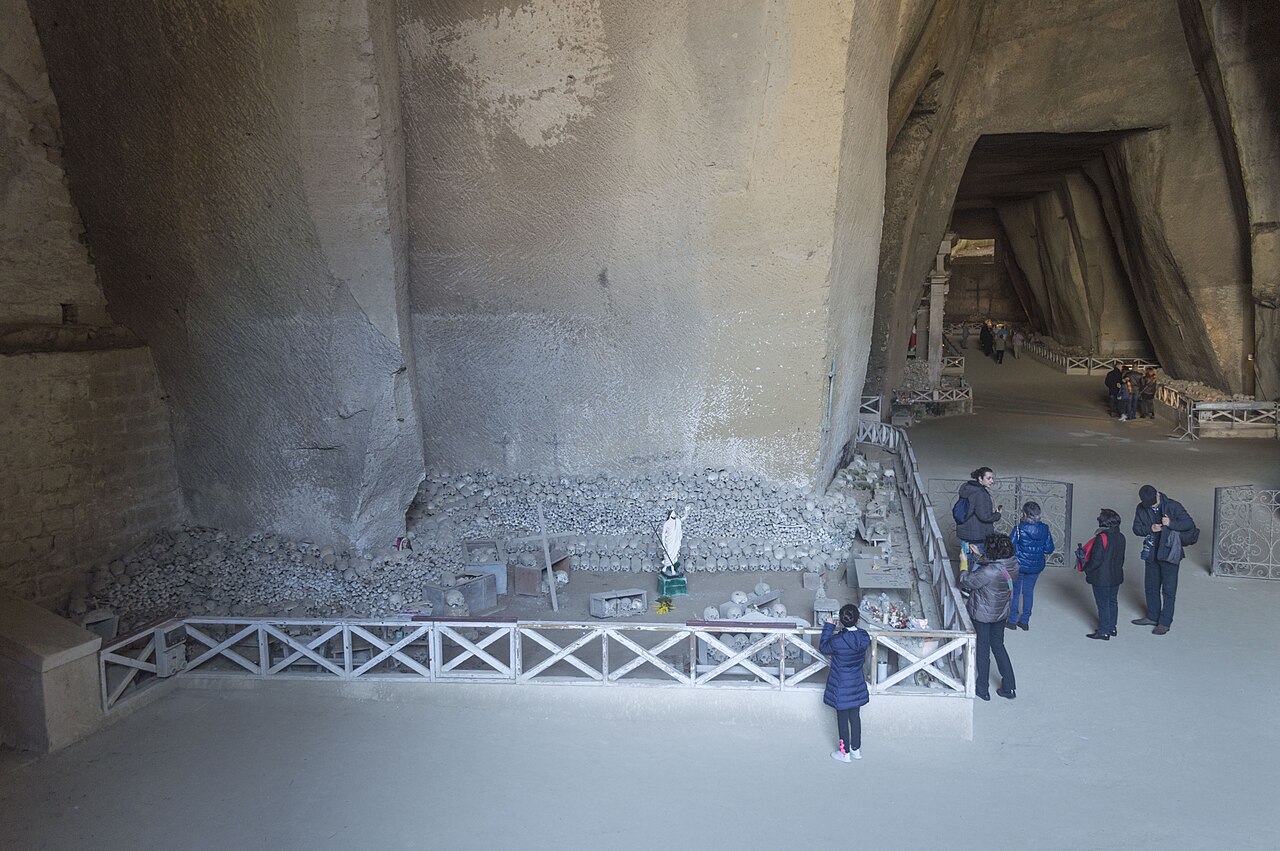
The cemetery is on Via Fontanelle, in the Sanità neighborhood, named after the springs that once bubbled up in the area. The place was a tuff quarry, used until the 1600s and then filled with bones: victims of the 1656 plague, the cholera outbreaks of the 1800s, and remains cleared out from church crypts all over the city. Estimates put the dead at around forty thousand, almost all without names.
In 1872, the city opened the cemetery to the public and put it in the hands of Canon Gaetano Barbati, who, with the help of some local women, organized the bones into boxes and on wooden racks. That’s where it all started.
Why “pezzentelle”
Pezzente, says the Treccani dictionary, comes from an old verb meaning “to beg,” rooted in the Latin petere, to ask. The anime pezzentelle are the souls who ask: poor, forgotten dead, with no one left to pray for them. In popular belief, they were stuck in Purgatory, needing the living to help them move on.
The deal was simple. The living person prayed and cared for the skull; the soul, comforted by this, would intercede for them. In Naples, that comfort has an old name, refrisco, from the Latin refrigerium, refreshment: the same refreshment for the dead that’s behind the tradition of leaving the table set for them on the night between November 1st and 2nd.
Adopting a capuzzella
The adopted skull was called a capuzzella. It was cleaned, placed on an embroidered handkerchief, then on a pillow, with candles and flowers all around. If you could, you gave it a home: a box, a little tabernacle sometimes locked with a padlock, a display case, a tin, or a scarabattola—a small glass-fronted shrine.
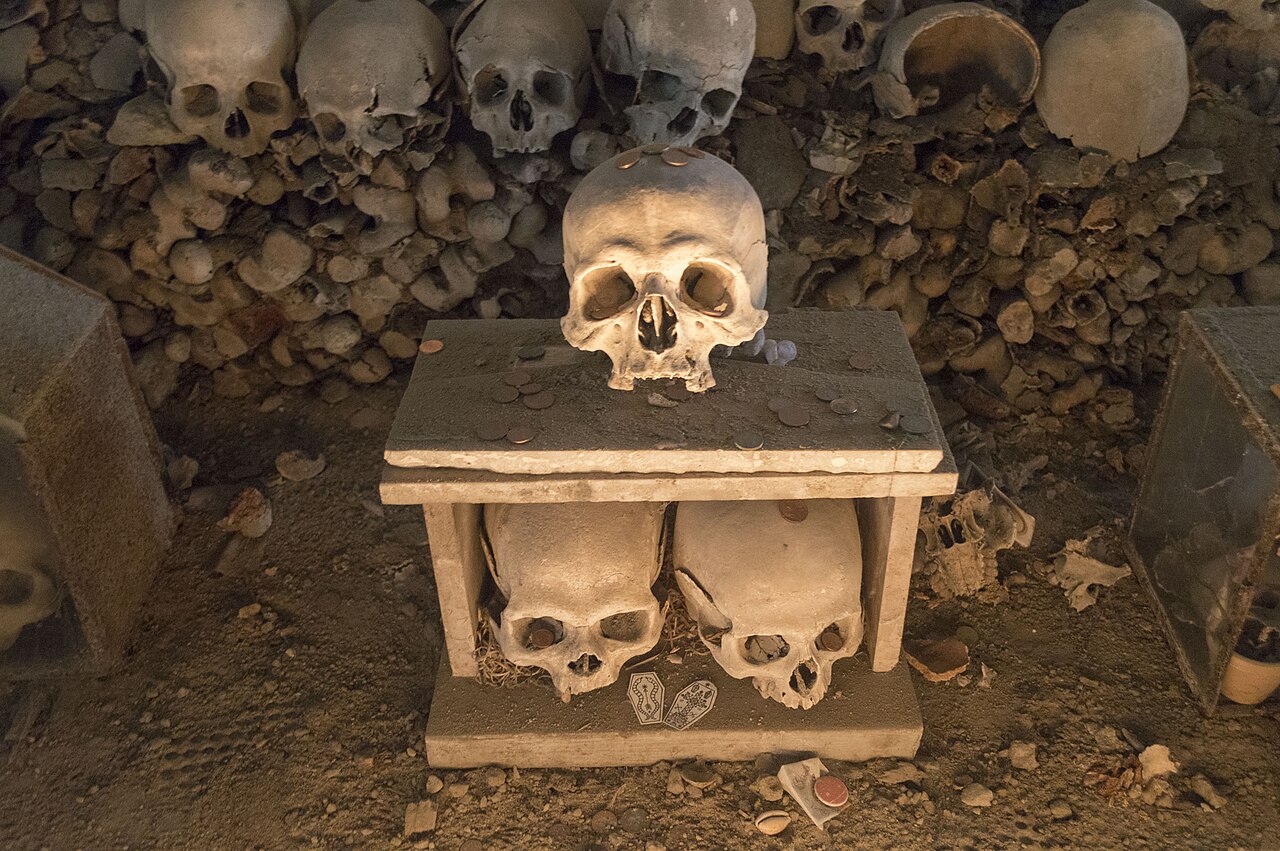
Then you waited for the dream. That’s when the soul would reveal who they’d been in life, and what they needed. People asked for protection, a grace, a husband, a child; and, some sources say, even a little help with luck, whispered in a dream. If the grace came, the skull got a better spot, in a display case; if not, it might go back to the pile.
The Captain and Donna Concetta
Some capuzzelle became famous. 'A capa d''o Capitano, with a darkened eye socket that legends can’t agree on, was the go-to for girls looking for a husband. Donna Concetta, 'a capa che suda—the sweating skull—is shinier than the others because it holds the quarry’s moisture: if it feels damp, the story goes, the grace has been granted. She was the one to ask for a child.
The ban and the reopening
In 1969, the Church of Naples banned the individual cult of the capuzzelle, saying it was too close to a pagan rite: some sources credit Cardinal Corrado Ursi, others an ecclesiastical court decree. But the devotion didn’t vanish overnight, and some say it faded more from forgetfulness than from the ban itself.
The cemetery’s had a stop-and-go life: closed and reopened several times, once even after a neighborhood occupation, and closed again in 2019. On April 18, 2026, it reopened, with a procession from Largo Totò, run by the La Paranza cooperative together with the city. You need a reservation to get in, and on Monday and Friday mornings there’s an hour set aside for those coming to pray.
The capuzzelle are still there, lined up with their pillows and candles. They have no names. For a century in Naples, that never stopped anyone from loving them.
How the Smorfia reads it
L'aneme d'o priatorioThe souls in purgatory
These are the anime pezzentelle: nameless dead who, in popular belief, waited in Purgatory for the living to pray them out.
'A capaThe head
The capuzzella, the little head: the skull picked from the pile, cleaned, set on a pillow, and treated like family.
'A rottaThe grotto
The Fontanelle Cemetery is a tuff quarry dug into the hillside: a vast cave where the city laid its dead for centuries.
'O muorto che pparlaThe dead man who talks
The adopted soul would show up in dreams: revealing who they’d been in life and what they needed. It was the dream that gave a name to the nameless.
'A sposaThe bride
Girls looking for a husband would turn to the Captain’s skull: a grace asked of the dead to help them reach the altar.
Where it comes from
Sources and further reading7 sources · 7 news outlets
More true stories
Rimmofatt! is symbolic entertainment. It doesn't predict winnings, doesn't increase your chances of winning and doesn't take bets. It is not a gambling service.