Nellie Bly, the reporter who went around the world in 72 days
On November 14, 1889, a 25-year-old journalist set off from New York with just one bag, determined to beat Phileas Fogg. Along the way, she met Jules Verne, crossed Italy by train, and found out she had a rival. She made it in seventy-two days.
The Rimmofatt! editors · November 14, 2026
On November 14, 1889, at 9:40 in the morning, a 25-year-old woman boarded a steamship in Hoboken, across the river from New York. She had just one bag, a sturdy coat, and the clothes on her back. Her mission? To travel around the world faster than Phileas Fogg, the character Jules Verne sent spinning around the globe in eighty days. Her name was Nellie Bly, and she set off with only two days’ notice.

The girl who pretended to be insane
Her real name was Elizabeth Jane Cochran, born in a small Pennsylvania town. Nellie Bly was her pen name. Two years before her big trip, she’d already made headlines with an even riskier stunt: for Joseph Pulitzer’s New York World, she pretended to be insane and got herself committed to the women’s asylum on Blackwell’s Island, New York. She got out after ten days, at the paper's request, and told the world what she’d seen. Her exposé, published in October 1887, led to reforms at the asylum.
The idea to race around the world was hers, inspired by Verne’s novel. Not everyone at the paper was on board—some of the old-timers would’ve preferred to send a man. In the end, she went, with a bold goal: seventy-five days.
Just one bag
Her luggage was tiny: a single bag, about sixteen inches wide and seven inches high, and not even a change of clothes. Inside were her underthings and toiletries. Almost all her money—two hundred pounds in notes and gold coins, plus a few dollars—she kept in a pouch around her neck.
Meeting Jules Verne
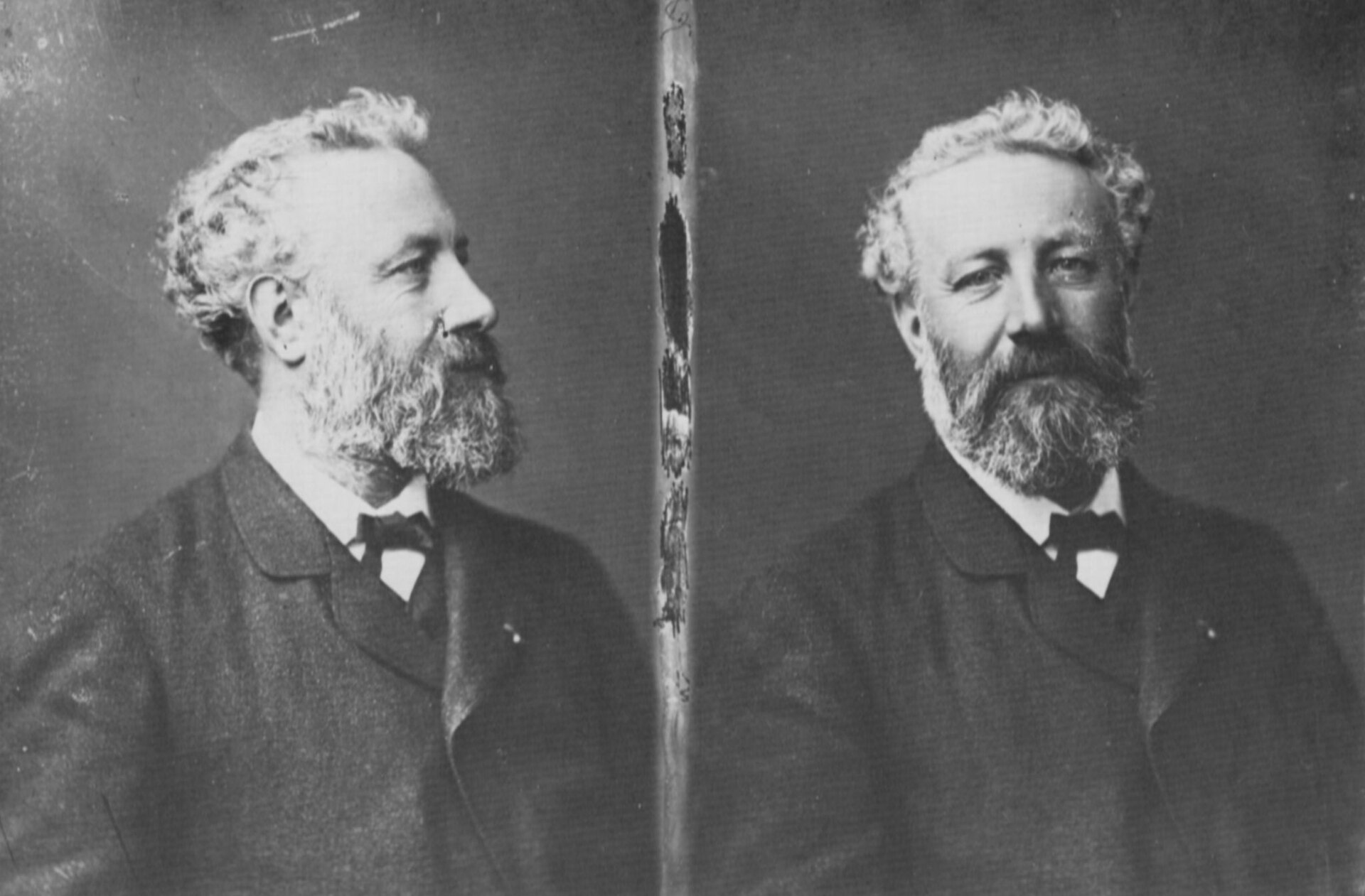
The steamship reached England on November 22. From London, Nellie crossed the Channel and caught a train to Amiens, France, where a surprise awaited: Jules Verne and his wife were at the station. The man who’d dreamed up the journey greeted her like an old friend, and the two chatted with the help of an interpreter. According to Nellie, Verne told her, “If you do it in seventy-nine days, I’ll clap with both hands.” She realized he didn’t quite believe in her seventy-five.
The train to Brindisi
From Calais, overnight, she took the mail train that crossed Europe all the way to southern Italy. She reached Brindisi on November 25 and boarded a ship bound for the Suez Canal. Before setting sail, she went to send a telegram, and the Italian clerk asked her what country New York was in.
Then the journey became a parade of ports: Port Said, the Suez Canal, Aden, Colombo on the island of Ceylon, Penang, Singapore. In Singapore, she even bought a monkey.
The rival she didn’t know about
In Hong Kong, at the end of December, she discovered something no one had told her. On the very day she’d left, another New York magazine, the Cosmopolitan, had sent another reporter, Elizabeth Bisland, to race around the world the other way—westward—to try to beat her. Nellie said she wasn’t in any race. Still, she pressed on.
From Japan, she crossed the Pacific and landed in San Francisco on January 21, 1890, two days behind schedule. To help her catch up, the railroad arranged a special train, which whisked her from San Francisco to Chicago in less than three days.
Seventy-two days
On January 25, 1890, at 3:51 p.m., Nellie Bly stepped off the train in Jersey City, just across from New York. It had been 72 days, 6 hours, 11 minutes, and 14 seconds since she’d set out. She’d beaten Phileas Fogg by more than a week—and even her own goal. A crowd was waiting for her.
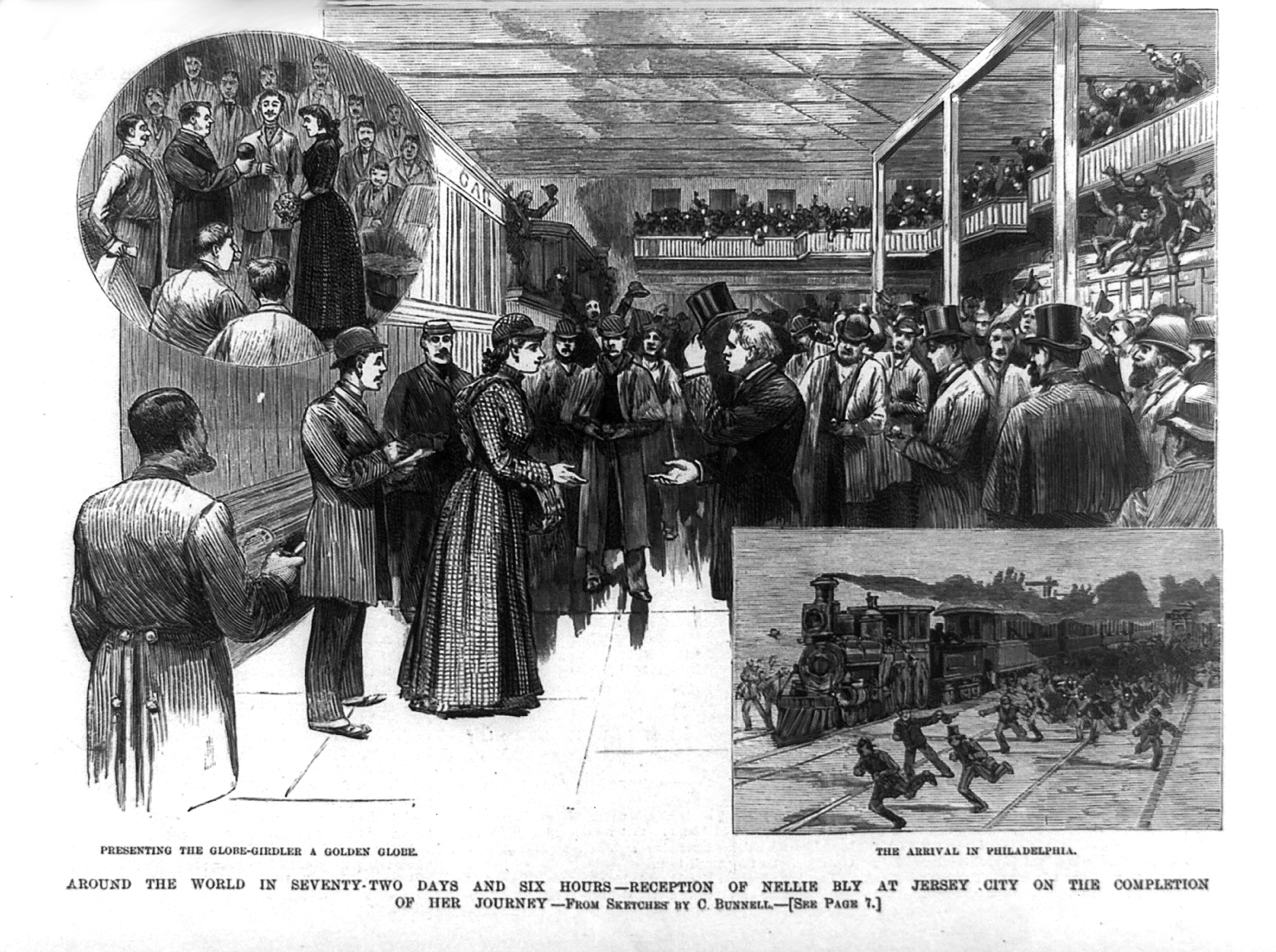
Throughout her trip, the paper kept readers on the edge of their seats: it invited them to guess the exact second of her return, with a trip to Europe as the top prize. Elizabeth Bisland arrived four and a half days later—she’d missed a connection and had to take a slower ship.
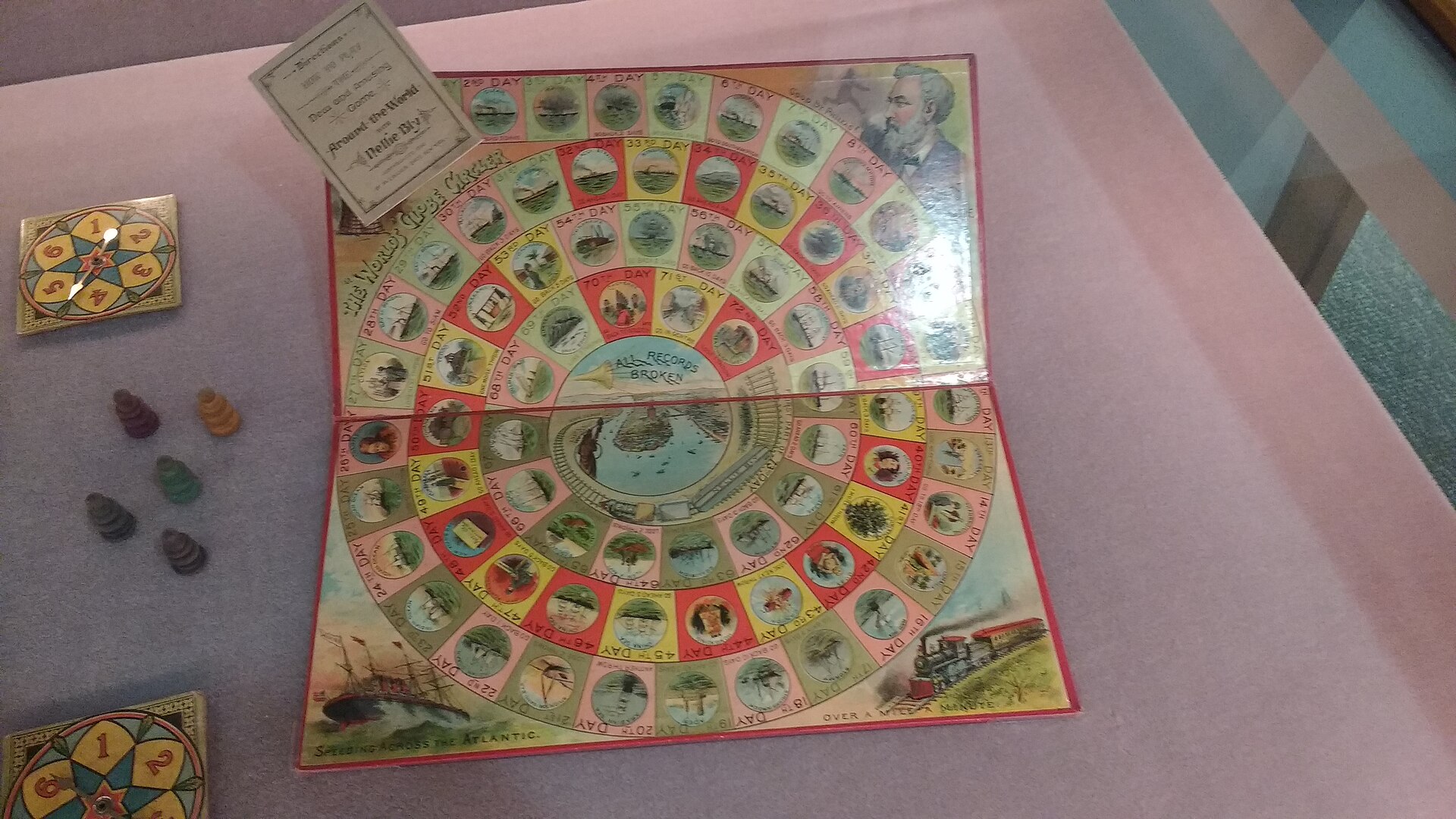
The journey even became a board game, “Round the World with Nellie Bly,” with spaces following her route.
After the trip around the world
The record lasted only a few months: soon after, an American traveler, George Francis Train, made the trip in sixty-seven days. But Nellie Bly kept something even better: she’d shown the world that a woman could do, all on her own and with just one bag, what a novel had imagined for an English gentleman with a servant and a suitcase full of cash.
After her journey, she wrote serialized novels, returned to journalism, got married, and ran a metal container company for a few years—she even held two patents. During World War I, she reported from the Eastern Front. She died in New York on January 27, 1922. Today, on the island where the asylum once stood—now called Roosevelt Island—there’s a monument in her honor.
She set out exactly one hundred and thirty-seven years ago, on a day just like today.
How the Smorfia reads it
'A meravigliaAmazement
The whole world followed her journey open-mouthed, stop after stop, and in the end a crowd was waiting for her at the station. In the Smorfia, this is wonder: what you feel when someone pulls off the impossible.
'O paccottoThe bundle
She set off with just one bag and not even a change of clothes. In the Smorfia, the bundle is the luggage of those who set out: sometimes, to go around the world, you really don't need much.
'O pazzoThe madman
Before her trip, she pretended to be mad to get into an asylum and tell the story from the inside about how women were treated. In the Smorfia, the madman is also the one who dares to do what no one else would.
Where it comes from
Sources and further reading4 sources · 3 news outlets
More true stories
Rimmofatt! is symbolic entertainment. It doesn't predict winnings, doesn't increase your chances of winning and doesn't take bets. It is not a gambling service.