San Carlo: the theater with mirrors aimed at the king
On November 4, 1737, for the king’s name day, Naples opened the world’s oldest opera house still in business. Built in just eight months, rebuilt in less than a year after a fire, every box has a tilted mirror to keep an eye on the king.
The Rimmofatt! editors · November 18, 2026
On November 4, 1737, Naples opened a theater like no other. It was St. Charles’ Day, King Charles of Bourbon’s name day, and the theater took his name. That night, in front of the king, "Achille in Sciro" by Domenico Sarro premiered, with a libretto by Pietro Metastasio. The Royal San Carlo Theater just turned 289, and it’s the oldest opera house in the world that’s never stopped running.
But its most charming quirk isn’t on stage. You have to sit in a box and look to the side.
Eight months for a theater
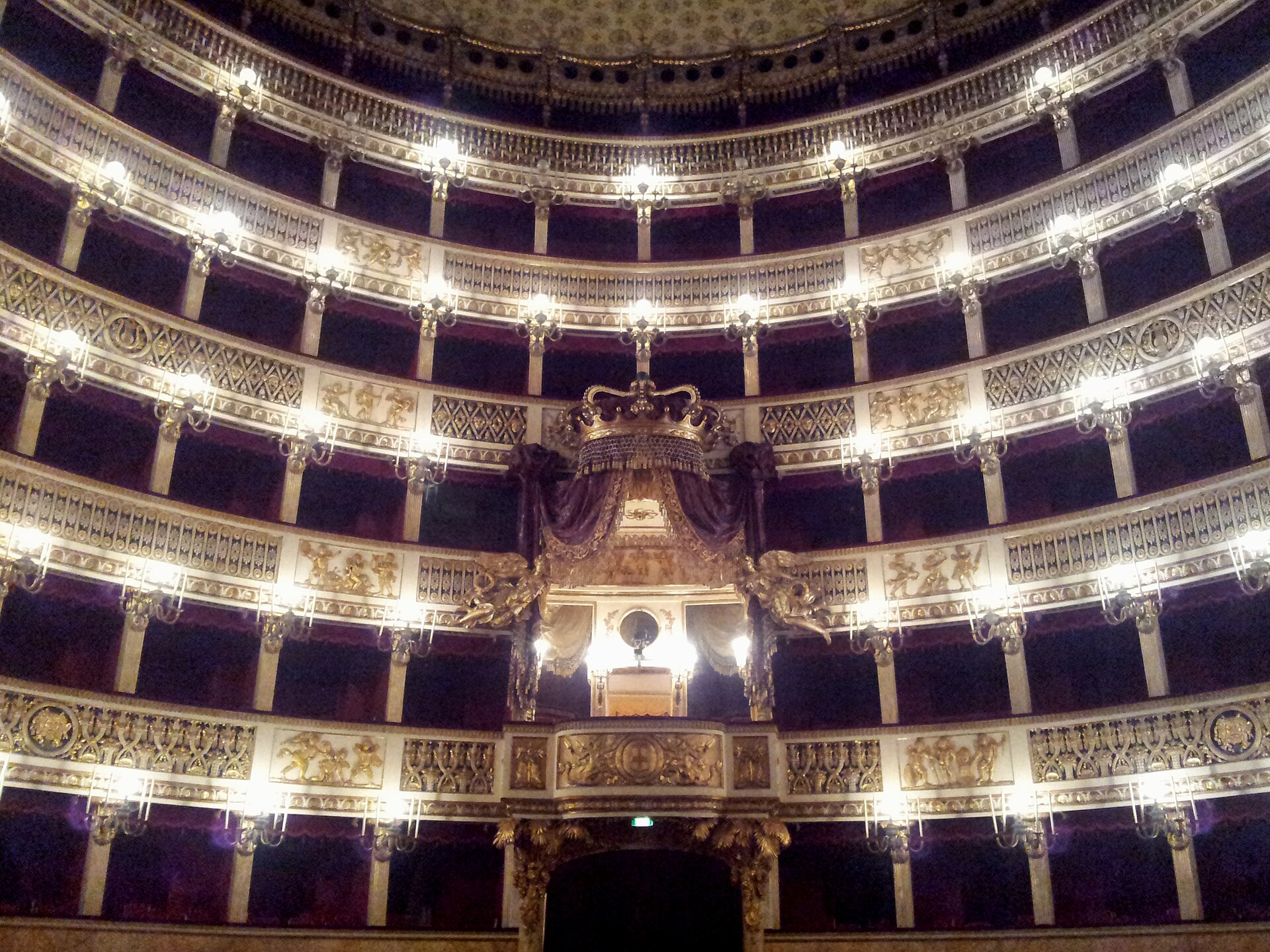
The king wanted it to replace the old San Bartolomeo theater, which was no longer enough for a capital city. The architect Giovanni Antonio Medrano designed it, working with Angelo Carasale, who had run the old theater. It took about eight months and 75,000 ducats. The auditorium was horseshoe-shaped—said to be the oldest of its kind—and could seat over three thousand people. San Carlo opened forty-one years before La Scala in Milan and fifty-five before La Fenice in Venice.
Mirrors aimed at the king
The theater is right up against the Royal Palace, and a door behind the royal box connects the two buildings: the king could go to the opera without even stepping outside. His box, in the center of the hall, fits ten people.
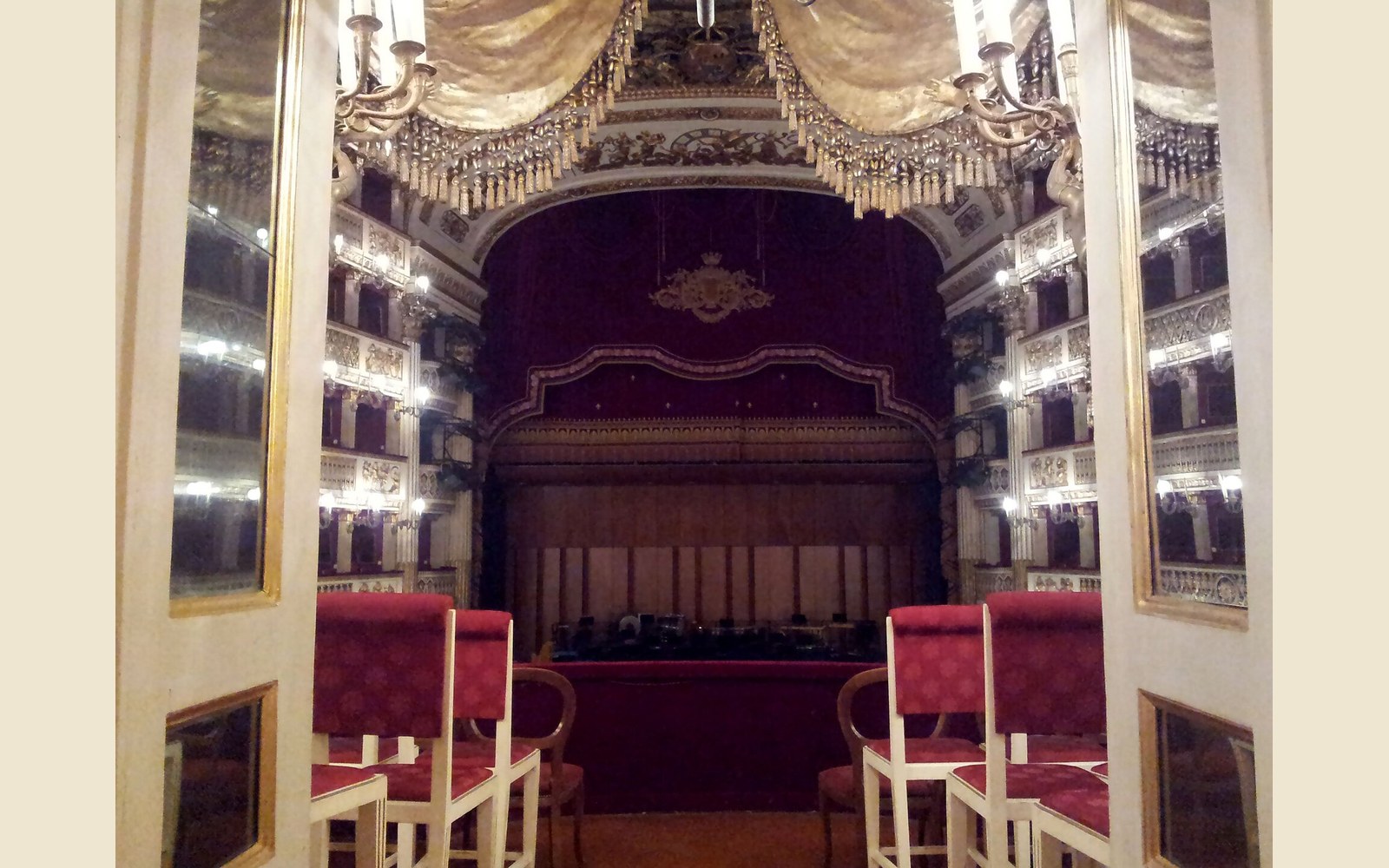
And here’s the oddity. In every box, on a side wall, there’s a tilted mirror set up to reflect the royal box. So, without turning around or being obvious, everyone could keep an eye on the king and his guests. Only the gallery up top is mirror-free. And since the boxes were open, with no grates, it worked both ways: nobody escaped the king’s gaze. In the hall, you watched the opera—but you mostly watched each other.
The night of the fire
On the night between February 12 and 13, 1816, during the dress rehearsal of a ballet, a fire broke out and destroyed the hall. It seemed like the end, but it was actually the start of a new record. The impresario Domenico Barbaja and architect Antonio Niccolini, who had already designed the new façade a few years earlier, rebuilt the theater in less than a year: nine months according to some sources, ten according to others.
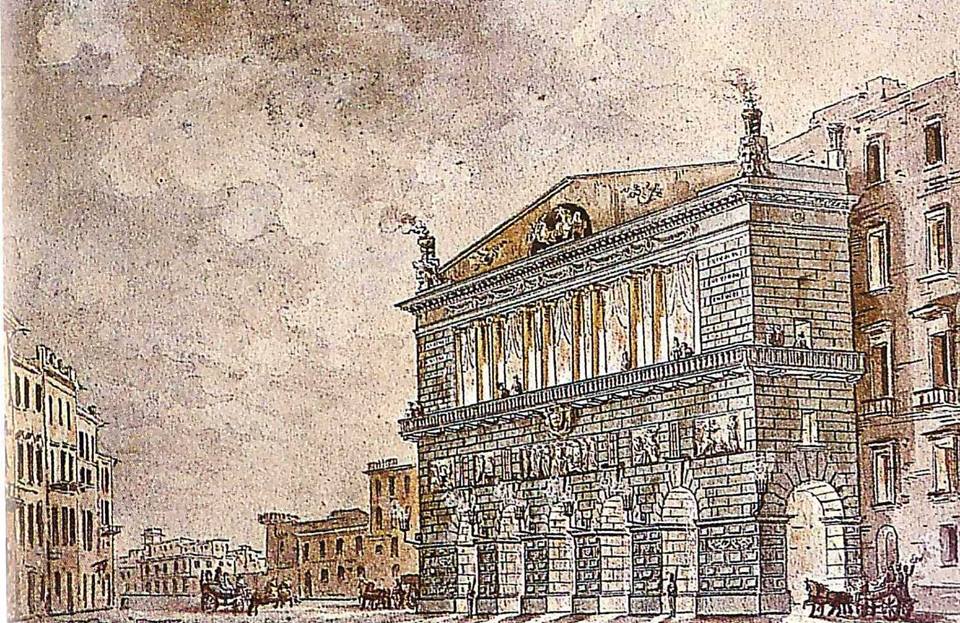
On January 12, 1817, San Carlo reopened with a cantata whose title RimmOfatt can't help but love: "Il sogno di Partenope" ("Parthenope's Dream") by Giovanni Simone Mayr. Stendhal, who saw it just after it was reborn, wrote: “The eyes are dazzled, the soul enchanted.” And he added: “There’s nothing in all of Europe that even comes close to this theater, or even gives the faintest idea of it.”
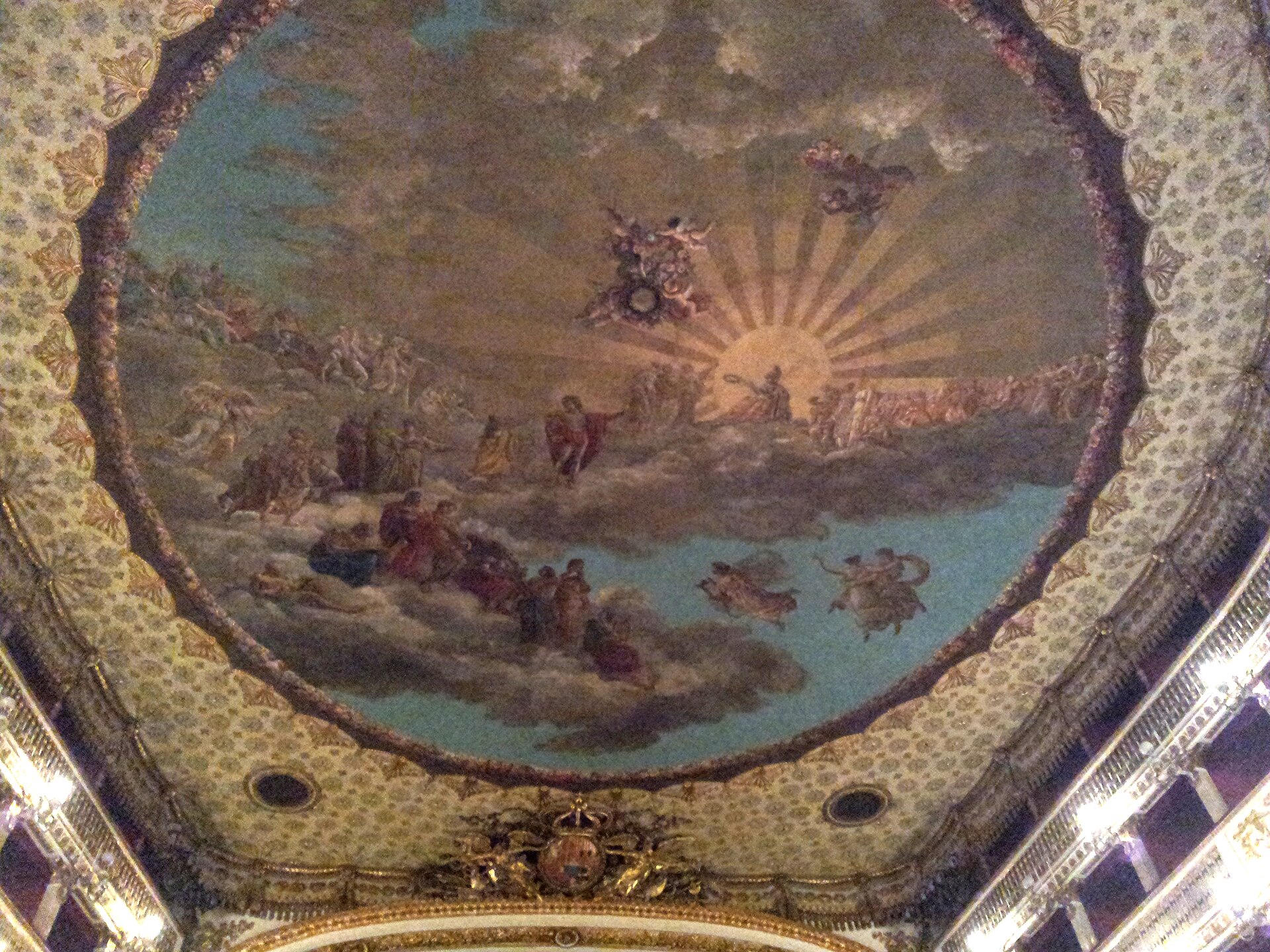
Look up and you’ll still see the ceiling painted by the Cammarano family—Antonio, Giovanni, and Giuseppe: Apollo introducing the world’s greatest poets to Minerva. The curtain, from 1854, is by Giuseppe Mancinelli and Salvatore Fergola, and shows Homer and the Muses among the poets.
Rossini, Donizetti, and Lucia
From 1815 to 1822, Gioachino Rossini was San Carlo’s artistic director. After him came Gaetano Donizetti, who stayed in Naples until 1838 and wrote sixteen operas for the theater: here, on September 26, 1835, "Lucia di Lammermoor" premiered. In 1826, a young Vincenzo Bellini also made his debut here with "Bianca e Fernando."
Bombs, and the first theater in Italy to reopen
During World War II, the theater was hit by bombs and the foyer was destroyed. But after Naples was liberated, San Carlo was the first theater in Italy to reopen, and on December 26, 1943, opera returned to the stage. The foyer was rebuilt just as it was.
Today, for safety reasons, there are about 1,380 seats—less than half of what there were in the 1700s. The last major restoration wrapped up in early 2010.
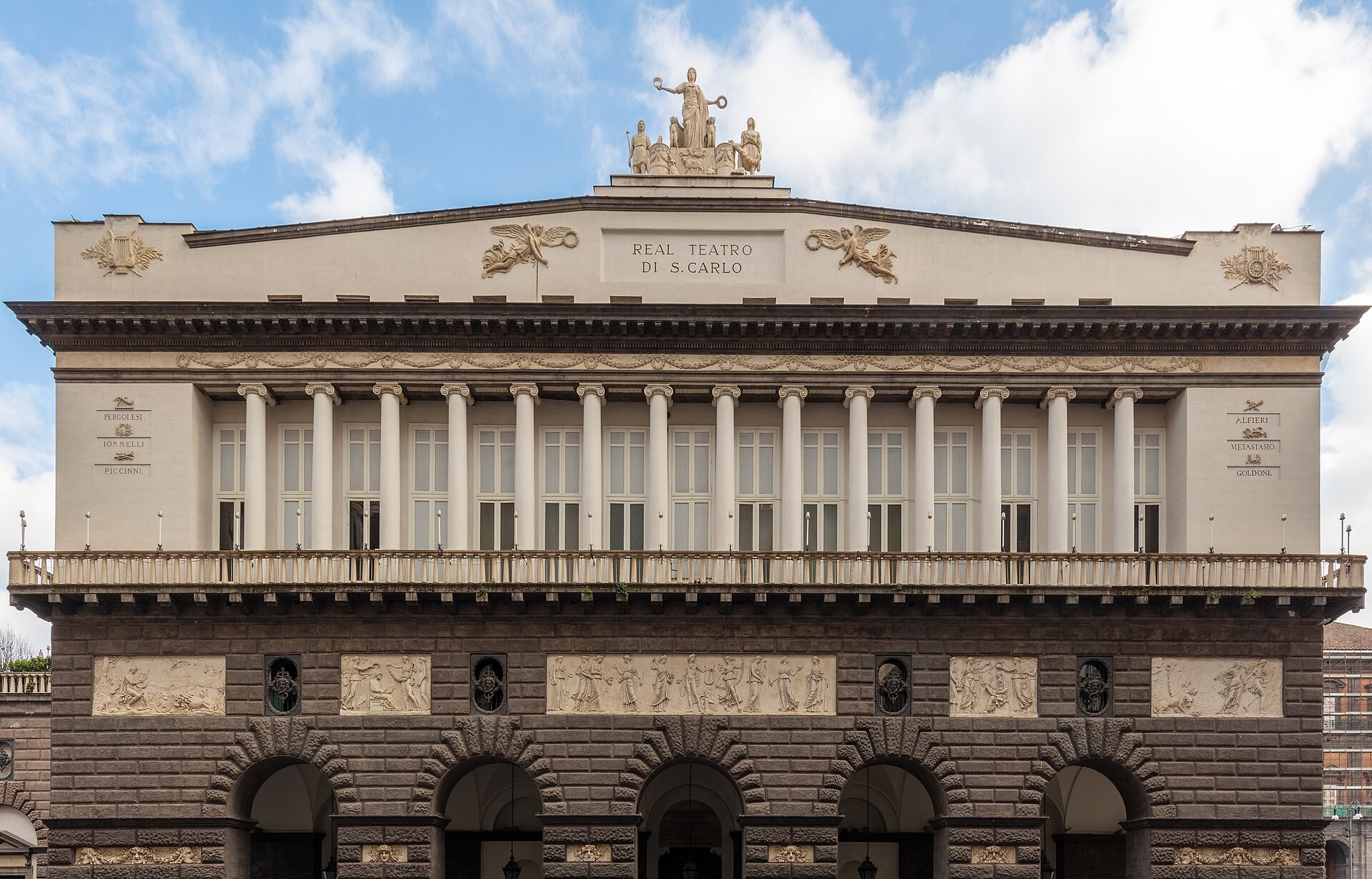
The king’s long gone, and his box sits empty. But the mirrors are still there, in every box, tilted toward the center of the hall. And anyone who sits at San Carlo, before the curtain goes up, always sneaks a peek.
How the Smorfia reads it
'A musecaMusic
It’s been Naples’ home of music for nearly three centuries: Rossini and Donizetti worked here, and Lucia di Lammermoor was born on this stage. In the Smorfia, music means harmony and celebration—and here, the music never stopped.
'O palazzoThe royal palace
The theater is right next to the Royal Palace, and a door behind the king’s box connects them. In the Smorfia, the palace stands for power: here, power went to the opera—and everyone watched it in the mirrors.
'A festaThe feast
It was born on Saint Charles's day, the king's name day, and the whole city celebrated. In the Smorfia, the feast is joy that is shared, and every opening night at the San Carlo still feels a little like one.
Where it comes from
Sources and further reading3 sources · 3 news outlets
More true stories
Rimmofatt! is symbolic entertainment. It doesn't predict winnings, doesn't increase your chances of winning and doesn't take bets. It is not a gambling service.